
YOU CAN BUY LIKES, BUT NOT HEARTS.
Hello friends, in today’s post, I’ll be sharing about the legal and ethical issues digital marketers face.
According to a report by the Nato Stratcom Centre of Excellence, the social media black market refers to unofficial channels that provide users with the opportunity to buy likes, shares, comments, subscribers and accounts. This can be sorted into three main categories – the easily accessible open market, the dark web and the offline word-of-mouth market.
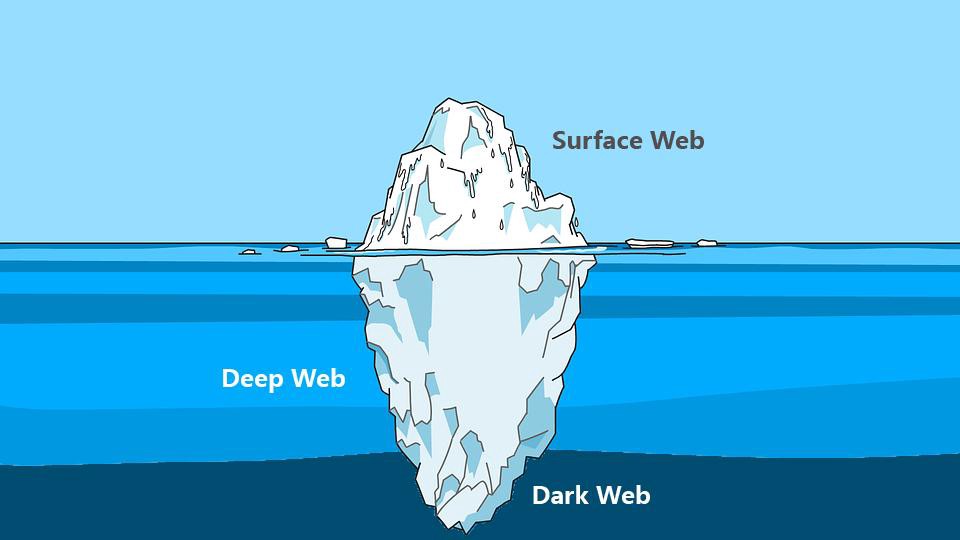
To help us understand just how dark the dark web is, let us refer to this image on the left.
The web is made of three sections – surface web, deep web and dark web.
Making up for 4% of the web, the surface web consists of public web pages that can be viewed by anyone. These pages can be indexed and aggregated by search engines using keywords, URLs and other page contents. Examples of these web pages include Bing, Google and Wikipedia.
The deep web accounts for 90% of the web. Pages in this categories are often excluded from search engine indexing, making them private as they contain protected information. Examples of such pages include financial or legal documents, government resources, subscription and academic information.
The remaining 6% goes to the dark web where the content of these databases cannot be indexed by conventional search engines. The pages are hidden and can only be accessed special web browsers like TOR; any activity is anonymous. Examples of what goes on in the dark web include sites with illegal information (i.e. financial fraud), drug trafficking, private communications and TOR encrypted sites.
Here, I’d like to zoom in to one particular topic – social media manipulation. With the influencer marketing industry estimated to be worth $5 to $10 billion by 2020, it is easy to see why users spend money to inflate their Instagram statistics.
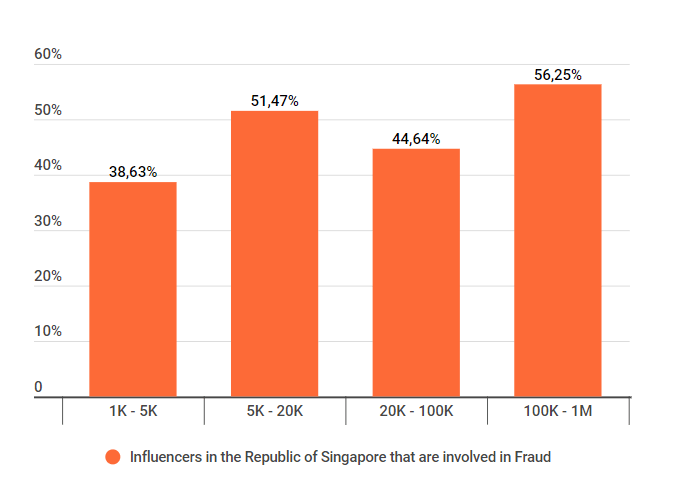
A recent study conducted by social media analytics tool HypeAuditor found that 47% of Singapore influencers used artificial methods to boost their follower and engagement numbers.
One of the more common methods to boost follower numbers, is to simply buy them. Because real growth takes time, some users get impatient and resort to buying either mass followers or suspicious accounts.
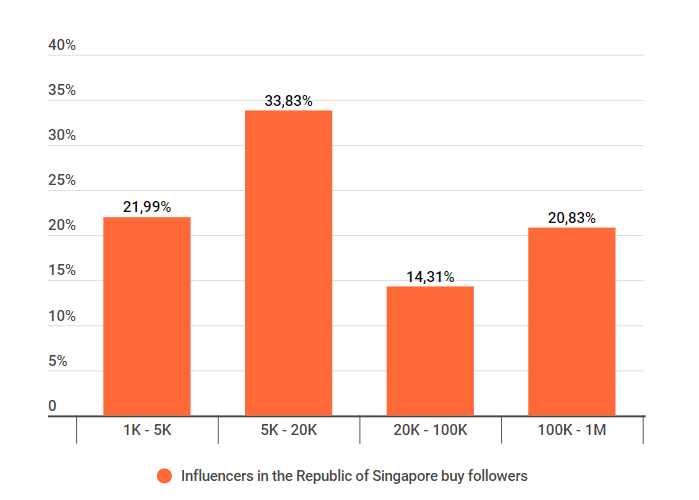
Over 33% of influencers with 5K – 20K followers, and 21.99% between 1K – 5K followers are found to be buying followers regularly.
This is an issue that has been happening for a while now. A video exposé was even done to perhaps, throw shade, and ultimately inform people to be careful of who they follow on their social media account.
The study by HypeAuditor also saw influencers inflating their comment section, with 16.89% (5K – 20K) and 22.82% (20K – 100K) respectively.
This is done by buying comments or having comment pods. The term “comment pods” refer to a group of Instagram users who band together to help increase engagement on each others’ content.
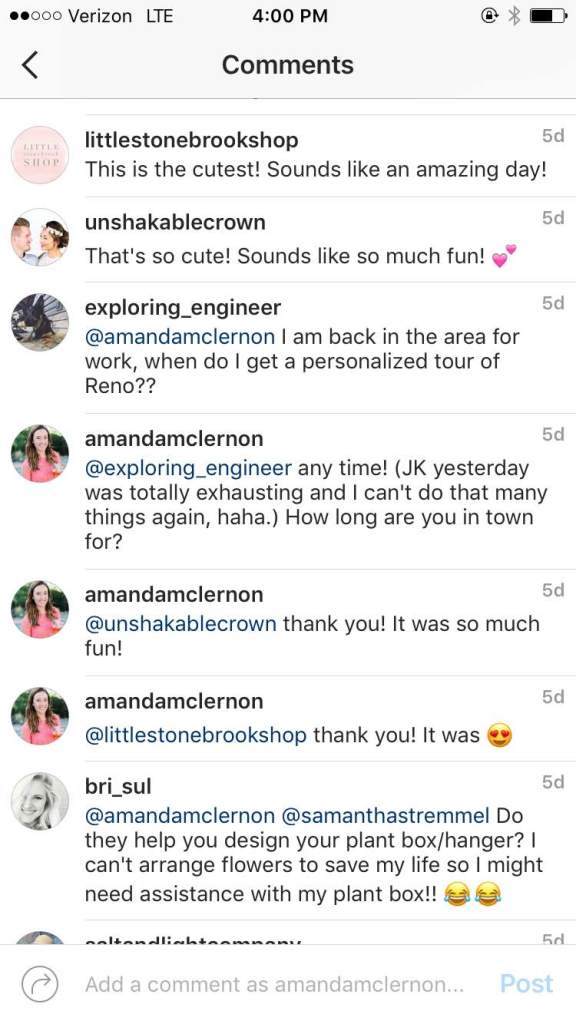
Detecting comment pods are hard because they have to be done manually and it takes a lot of time. You will need to check every comment and the user who wrote it. Who has the time for that?
I personally don’t care for the whole influencers buying followers or comments thing. I know of people who get so riled up when they find out their favorite influencer bought fake followers. I can understand the anger because it’s a matter of principle and ethics. But then again, YOU get to choose who you want to follow. If it clashes with what you think, then unfollow the account. Simple as that.
What do you guys think? Let me know in the comments section!

 The Deserving Truth
Your blog title is so apt for this topic! ‘You can buy likes, but not hearts’ – that was what happened during the Daryl Aiden Yow saga. I’m not sure if you’ve heard of it, but here’s the link: https://mothership.sg/2018/06/daryl-aiden-yow-instagram-photos-singapore/. Being known for his amazing photography and photo editing skills, it came as a shock to many when he was called out for his unethical behaviour. But I’m glad that he came clean and has now turned over a new leaf. Daryl now openly posts behind-the-scenes of his edits for all to see.
Do you think he should have deactivated his Instagram account for good after deceiving all his followers and clients? What are your thoughts about this incident? I’d love to know!
LikeLike
Hey Grace, yes I’ve heard of this incident. Hmm, I think that what he did was wrong but it wasn’t something that he has to deactivate his Instagram account for. I can understand that people feel angry because he manipulated the situation, or photos for that matter, to his advantage. But, it was also a great learning point for him and I’m glad that he has since openly share his photo edits. It seems like he has become a better person and that’s a good thing 🙂
LikeLike